
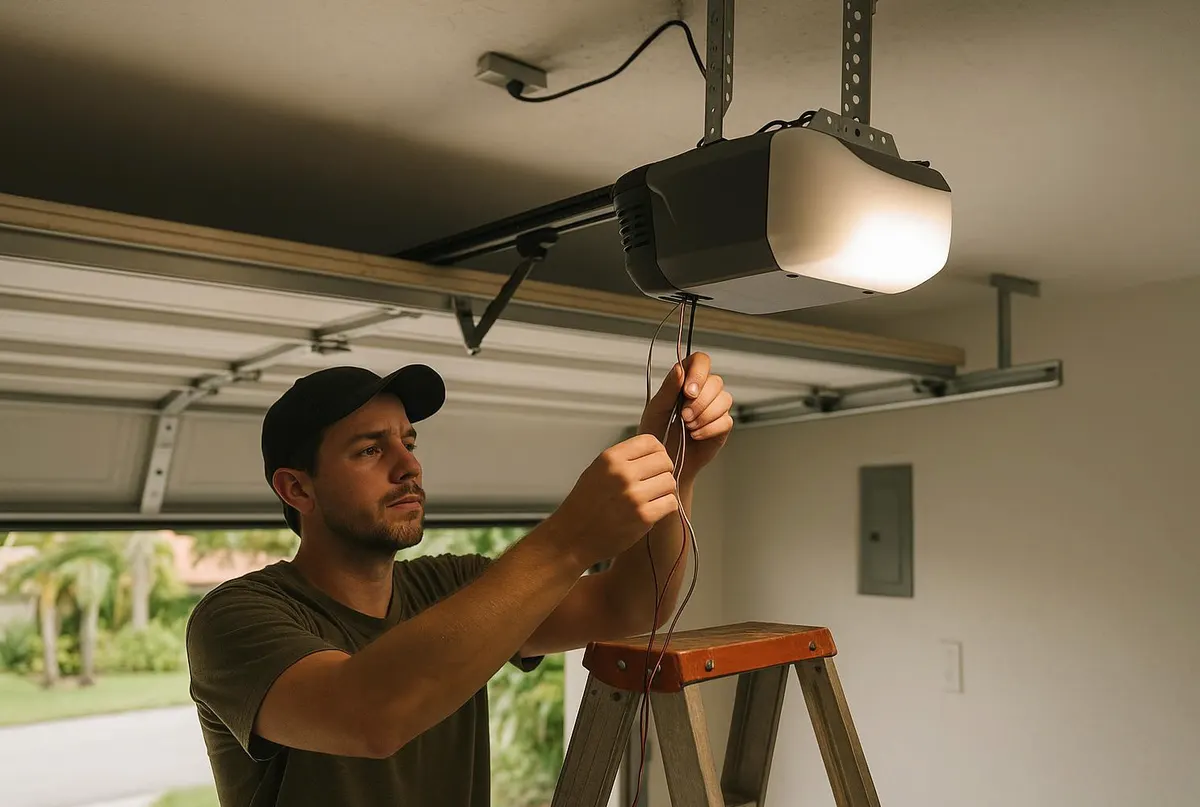
Short answer: lubricate the moving parts, check the weatherstripping, test the balance, and look at your springs and cables before the first hard freeze.
That's the quick version. If you do nothing else before winter, do that much. But if you want your garage door to make it through a Nassau County winter without a 7am breakdown on a 20-degree morning, it's worth understanding why this season is harder on doors here than almost any other time of year.
Why winter is rough on garage doors in this area
North Bellmore and the surrounding towns deal with a specific combination of conditions that wears garage doors down faster than milder climates. Repeated freeze-thaw cycles cause metal to contract and expand, which stiffens springs, dries out lubricant, and can crack weatherstripping that was already brittle from a humid summer. Road salt tracked in on tires and boots eats at tracks, hinges, and the bottom of steel doors over time. Nor'easters bring wind-driven snow and ice that can jam tracks or freeze a door shut overnight. And because so much of the housing stock here is older, many garage doors are original to the house or close to it — meaning springs, cables, and hardware that have already seen years of this cycle and have less give left in them.
None of this means your door is doomed. It means a little attention now saves you from troubleshooting a frozen or broken door during the first real cold snap.
The pre-winter checklist
- Lubricate the right parts. Use a silicone or lithium-based garage door lubricant (not WD-40, which doesn't last) on the rollers, hinges, and springs. Skip the tracks themselves — they should stay clean and dry, not greasy.
- Test the balance. Disconnect the opener by pulling the release cord, then lift the door halfway by hand. It should stay in place on its own. If it drifts up or crashes down, the springs are out of balance and compensating for that strain in cold weather is exactly what causes mid-winter spring failures.
- Inspect the weatherstripping. Run a hand along the bottom seal and side weatherstripping. If it's cracked, flattened, or pulling away from the door, replace it now. A worn seal lets in cold air, moisture, and the salt spray that gets kicked up off wet roads, and it's a cheap fix compared to what it protects against.
- Check the auto-reverse safety feature. Place a block of wood or a roll of paper towels in the door's path and close it. The door should reverse on contact. Cold weather can affect sensor alignment and response time, so this is worth testing before you're relying on it daily.
- Look at cables and rollers for wear. Frayed cables or rollers with flat spots or cracks are more likely to fail when metal contracts in the cold. These aren't parts to wait out — once a cable starts fraying, it's a matter of when, not if.
- Clear and inspect the tracks. Dirt, leaves, and old lubricant buildup in the tracks can freeze overnight and keep the door from moving smoothly. A wipe-down with a damp cloth followed by a dry one is usually enough.
- Confirm the opener has backup power or know your manual override. Nor'easters bring power outages. If your opener doesn't have battery backup, make sure everyone in the house knows how to use the manual release safely.
Signs you shouldn't wait on
- The door is noticeably noisier or jerkier than a few months ago
- It takes more force than usual to open manually
- You see rust forming on springs, hinges, or the bottom panel
- The door has started sagging on one side
Any of these tend to get worse, not better, once temperatures drop and metal parts tighten up. A door that's merely annoying in October can be a stuck or broken door in January.
When to call North Bellmore Garage Door
If your balance test fails, you see fraying cables, or the door just doesn't feel right when you run through this checklist, that's the point to call in a technician rather than keep adjusting things yourself — garage door springs are under serious tension and aren't a safe DIY repair. North Bellmore Garage Door handles spring replacement and garage door maintenance visits that cover exactly this kind of pre-winter tune-up: balance testing, lubrication, hardware inspection, and weatherstripping replacement, done by someone who knows what a door that's seen a few Nassau County winters tends to need.
If you're in North Bellmore, Bellmore, Merrick, Wantagh, Seaford, East Meadow, Levittown, or Jerusalem and want your garage door checked before the cold really sets in, give North Bellmore Garage Door a call to schedule a winter maintenance visit.